
Defense industrial base small business support covers funding, contracting, compliance and introductions to primes, and the right starting point depends on what your company makes. Find your sector below.
The defense industrial base isn’t one industry. CISA counts more than 100,000 companies and their subcontractors working under Department of Defense contracts, from airframe builders to software shops, which is why one list of resources never fits everyone and why the same service matters at different moments for different companies. A drone developer and a machine shop don’t start in the same place. The cluster groups its help into seven service areas, and this page shows which to read first.
One caution. The sector headings below are groupings to help you find your way. They aren’t an eligibility test. Eligibility comes from the Who Qualifies list on our membership page, and applications are reviewed to confirm it.
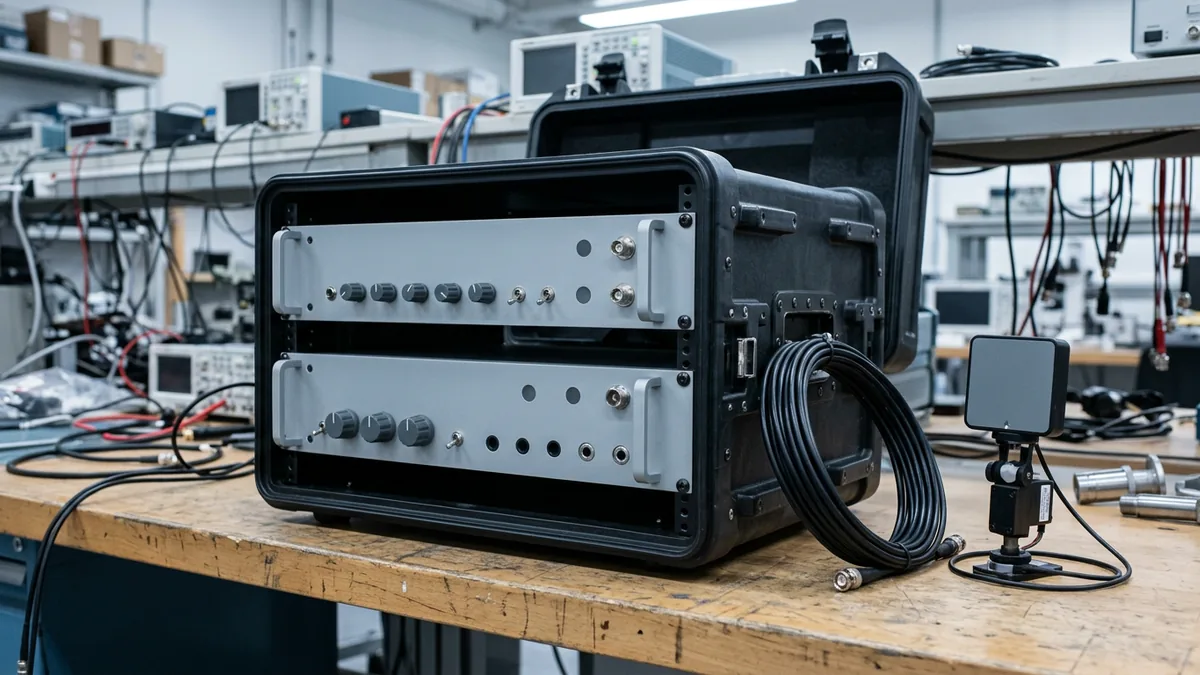
RF, communications, sensor and unmanned systems companies
If you build radios, antennas, sensors or unmanned systems, your first questions are probably about money and buyers. Who pays for a prototype? Which program office needs it?
- Prototype funding can start with SBIR and STTR topics, which are posted on SBIR.gov and change from one solicitation to the next, so our guide to DoD SBIR topics shows how to read one before you spend time on a proposal. Don’t skip it.
- Buyers get easier to find once you know which agencies buy what you sell.
- Hardware that handles controlled information raises a compliance question early, so read whether CMMC applies to your company first.
Once a prototype exists, the prime contractor matchmaking service is the next stop, since it’s built around facilitated introductions to defense primes, and no introduction comes with a promise that a prime will place an order or sign a contract.
Manufacturers and component suppliers
Parts makers sit in the middle of the supply chain. A prime sets requirements, and those requirements flow down to the shops that cut, lay up, wire and test the hardware, through the subcontract terms and the clauses attached to them.
Two topics come up early. One is how a prime wants to work with suppliers, covered in our post on how suppliers get onto a prime contractor’s team and in prime contractor vs. subcontractor. The other is the compliance terms that travel with the contract, laid out in CMMC flow-down for subcontractors.
A rule of thumb. If a prime has already asked about CMMC, start with the CMMC and compliance readiness service. If nobody has asked yet, start with introductions, and read the compliance material once a prime or a solicitation starts naming specific requirements for the work you want.
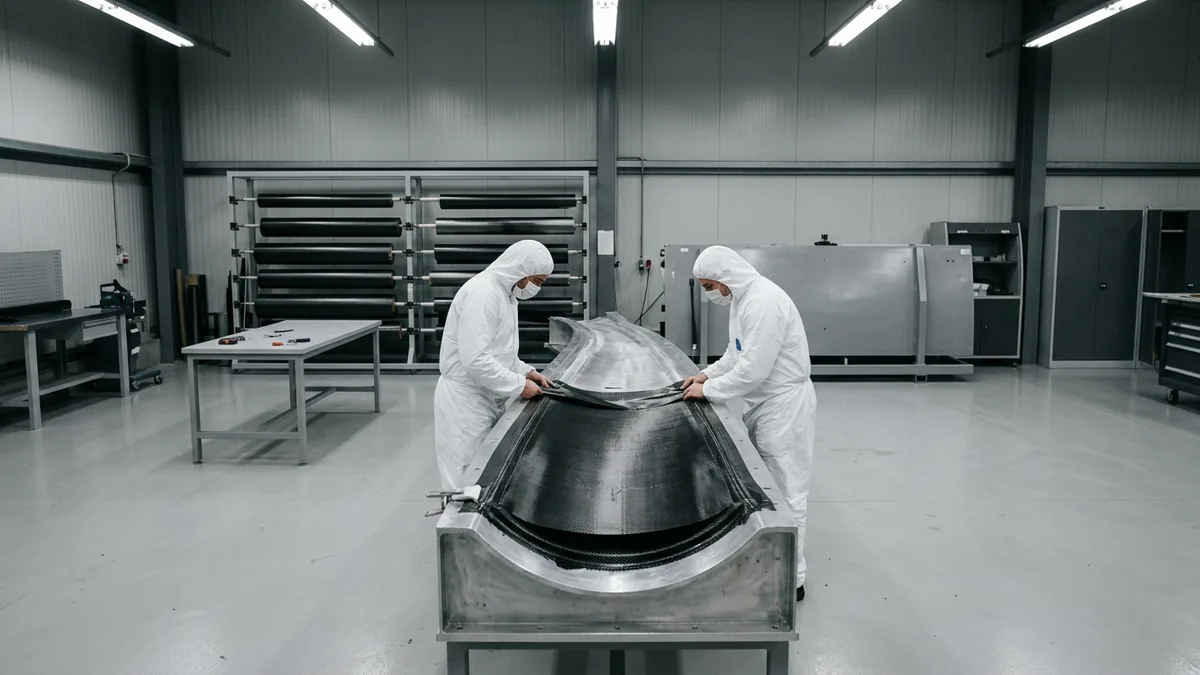
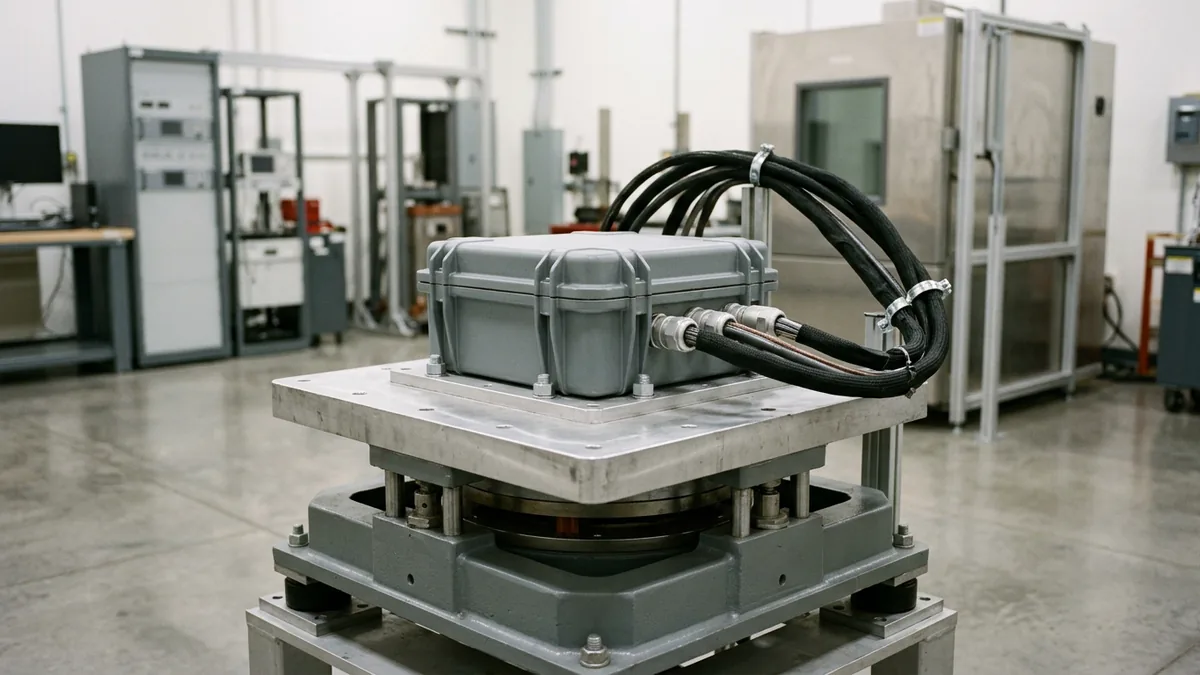
Engineering, test, software and dual-use companies
Dual-use companies have a commercial product and a defense use for it. Two markets, one product. The membership page says, “Dual-use technology companies with both commercial and defense applications are also eligible to apply.” Applications are reviewed to confirm program eligibility.
Our dual-use technology guide explains how the two markets differ. The commercialization service covers the path from prototype to production, including dual-use go-to-market strategy and the business development work that sits between a working product and a first defense customer.
Engineering and test firms, and software, AI and cybersecurity companies serving defense, should read about compliance readiness early, because controlled data travels with the work and a prime may ask about it before it asks about almost anything else.
Defense industrial base small business support by sector and NAICS code
A NAICS code is the six-digit number that classifies a business by its main activity. SBA sets its small business size standards by code in 13 CFR 121.201, counted in employees for most manufacturing codes and in average annual receipts for many service codes. The codes below are examples, read in that table on November 23, 2026.
Find the row closest to what you build. Start with the first column.
| Your company | Example NAICS code | Size standard counted in | Read first |
|---|---|---|---|
| Aircraft and aerospace manufacturer or parts supplier | 336411, Aircraft Manufacturing | Employees | Prime contractor matchmaking |
| Radio, antenna or communications builder | 334220, Radio and Television Broadcasting and Wireless Communications Equipment Manufacturing | Employees | SBIR/STTR funding assistance |
| Sensor, navigation or guidance developer | 334511, Search, Detection, Navigation, Guidance, Aeronautical, and Nautical System and Instrument Manufacturing | Employees | DoD SBIR topics guide |
| Engineering or test firm | 541330, Engineering Services, which has a separate entry for military and aerospace equipment | Average annual receipts | Government contracting guidance |
| Software, AI or cybersecurity company serving defense | 541512, Computer Systems Design Services | Average annual receipts | CMMC and compliance readiness |
| Research and development company | 541715, Research and Development in the Physical, Engineering, and Life Sciences | Employees | SBIR/STTR funding assistance |
| Dual-use company, or an established contractor moving into new work | Whichever code covers your main product | Look it up in the table | Commercialization and growth |
Four steps to find your starting point
Do them in order. None of them needs a login.
1
Name what you build
Use plain words first: antennas, airframe parts, test services, software.
2
Check your code and size standard
SBA’s table in 13 CFR 121.201 lists the standard for each NAICS code.
3
Read the service that fits
Each service page explains what it covers.
4
Apply and let the review run
Applications are reviewed to confirm program eligibility. Not all applicants are approved automatically.
Step 4 wording is from the cluster’s membership page. Size standards checked November 23, 2026.
Where to go next in the services
SBIR/STTR funding assistance
Prototype-stage developers can match a technology to open solicitations through the SBIR/STTR funding assistance service.
Prime contractor matchmaking
Suppliers can ask about facilitated introductions to defense primes through prime contractor matchmaking, which promises no contract.
CMMC and compliance readiness
Readiness guidance and referrals to certified assessors, never certification itself, come through CMMC and compliance readiness.
Commercialization and growth
Dual-use go-to-market strategy and the path from prototype to production sit in defense technology commercialization.
More to read
- Government contracting guidance, from SAM.gov registration to capability statements
- The Southern California region, county by county
- Finding expiring federal contracts by NAICS code, for suppliers choosing where to aim
What small defense companies ask about their sector
So what counts as the defense industrial base?
CISA describes the defense industrial base as the worldwide industrial complex behind military weapons systems, subsystems and parts, including more than 100,000 companies and their subcontractors.
That’s a wide net. The definition spans research, design, production, delivery and maintenance, so it reaches well beyond factories. The full text is on the CISA sector page.
Which NAICS code should I use?
Short answer: the one that matches what your company mostly does. SBA publishes its size standards by NAICS code, so the standard follows the code you choose.
Some codes carry separate entries, such as Engineering Services for military and aerospace equipment. Be specific. If two codes fit, read the size standard for both in 13 CFR 121.201 before you decide, because one may count employees and the other average annual receipts, and a company can sit under one limit and over the other.
My company sells to commercial customers too. Does that matter?
The membership page says, “Dual-use technology companies with both commercial and defense applications are also eligible to apply.”
It adds that applications are reviewed to confirm program eligibility, so read the full Who Qualifies list before you apply and check each condition against your own company, not against your sector heading. Read it first.
What if my company doesn’t fit any of these sectors?
The sector headings are groupings, not an eligibility test, so missing from the list doesn’t settle anything either way. Headings aren’t rules.
Eligibility comes from the conditions on the membership page. Questions go through the contact page, where two business days is the target.
Does the cluster certify me for CMMC or find me a contract?
The SoCal Defense Innovation Cluster isn’t a government agency and has no contracting authority.
Formal CMMC certification requires a third-party assessment organization. The cluster provides readiness guidance and referrals to certified assessors, and the common questions page lists what it does and doesn’t do.
How do the three counties differ for defense work?
Each county differs. The home page describes Orange County as a hub for aerospace and defense technology companies, engineering firms and component suppliers.
Los Angeles County is home to major defense prime operations and a growing defense technology startup community. In San Diego County, NIWC Pacific, Naval Base San Diego, Camp Pendleton and MCAS Miramar anchor one of the largest defense concentrations on the West Coast.
Tell the cluster what your company builds
Membership and cluster-funded services are provided at no cost to eligible participating businesses, subject to program requirements and available resources.