
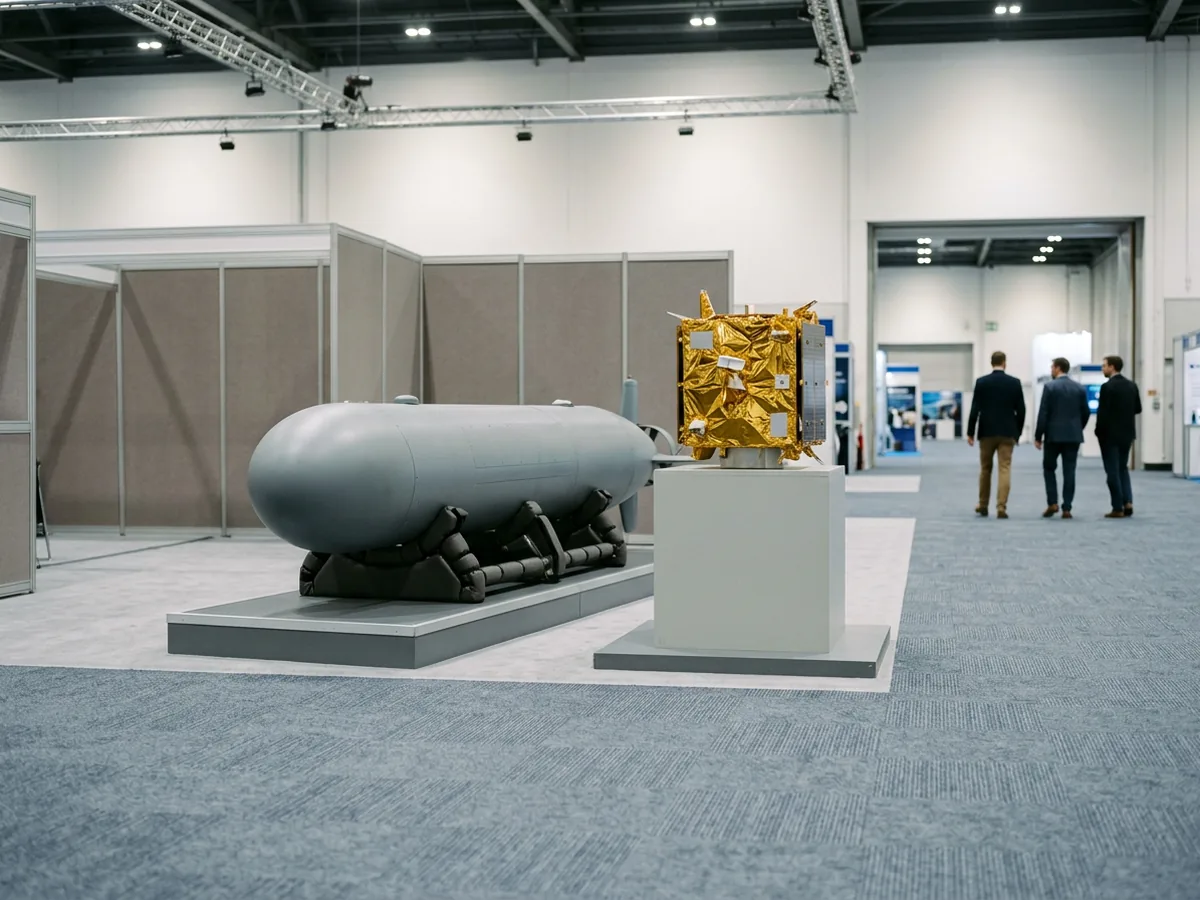
Two hours goes fast. The event page sets the whole thing on one afternoon, 3:30 to 5:30 PM PST, so a little prep changes what you take home.
You don’t have to be a member to go. The event page says it’s open to eligible defense small businesses with no membership required, and the cluster’s membership page says the same about its events: you don’t need to be an approved member to register and attend.
What This Defense Industry Day in Southern California Is
The Defense Cluster Launch & Industry Day is the inaugural event of the SoCal Defense Innovation Cluster, an SBA Regional Innovation Cluster operated by C4 Holding Co, LLC. The event page calls it the first of eight quarterly gatherings for defense small businesses in Orange, Los Angeles, and San Diego Counties.
Worth saying plainly. The cluster is not a government agency and has no contracting authority, and its common questions page says so in nearly those words. The U.S. Small Business Administration lists Regional Innovation Clusters among its targeted support and services.
The Agenda in Order
The event page names each session below. It publishes no time for individual blocks, so treat the order as the plan and the clock as a guess.
| Session | Worth bringing | Look first |
|---|---|---|
| Welcome and program overview | One sentence on what you make and who buys it | The membership page |
| SBIR/STTR funding | Your technology idea, plus your ownership and size facts | SBIR.gov |
| CMMC and compliance | The cybersecurity clauses from a contract you hold or want | 32 CFR part 170 |
| Prime and defense contractor connections | A one-page capability statement | The prime matchmaking page |
| C4OS platform | One question about what members can use | The platform page |
| One-on-one questions | Your three questions, ranked | The seven service areas |
Only the first three rows ask you to read anything beforehand. The rest is a document and a question.
The Funding Session: Learn the Rules First
Small Business Innovation Research (SBIR) and Small Business Technology Transfer (STTR) are the federal programs that fund small-business research and development, and SBIR.gov is where the program publishes its own rules. Ownership and size requirements live there. Read them before December 3, not after.
Dollar amounts are the question everybody wants answered, and nobody on a stage can answer it in general. Award amounts and timelines vary by agency and topic, and they change over time, so the only figure worth trusting is the one printed in the current solicitation.
Bring a short description of the technology you’d propose. Not a pitch. Two sentences you could say to a stranger. The cluster’s SBIR/STTR funding assistance page describes opportunity matching and technical review, though its FAQ is blunt about the limit: shaping guidance, technical review, and feedback, not ghostwriting.
The Compliance Session: Bring Your Contract Clauses
Cybersecurity Maturity Model Certification (CMMC) is the Department of Defense’s check that contractors protect the information they handle, and the rule that sets it up is 32 CFR part 170. Which level applies turns on the contract, not on how small you are.
So bring the clauses, not the worry. Open the solicitation or subcontract you care about and look for DFARS 252.204-7012, the clause on safeguarding covered defense information, along with any CMMC requirement the document spells out. Missing both? Say so in your one-on-one.
Don’t expect a certificate. The FAQ answers that question directly: the cluster provides readiness guidance and gap assessments, and formal CMMC certification requires a third-party assessment organization. Fees for third-party assessments are charged by those assessors, not by the cluster. Our compliance readiness page and our guide to whether CMMC applies to your company cover the rest.
The Prime Contractor Session: One Page Is Enough
Meet the Big Players is how the event page frames the session on getting small businesses in the door with primes and other defense contractors. It names no company. Plan around the session, not around a logo you hope to see.
What belongs in your hand is a single page: what you make, the registrations you hold, the North American Industry Classification System (NAICS) codes you work under, and a contact who answers email. The cluster’s capability statement template shows a layout.
Primes buy from suppliers they can find and check, and we wrote up how suppliers get onto a prime contractor’s team for that reason. The matchmaking page is just as plain about limits: “We don’t guarantee placement with a prime contractor.”
Make the One-on-One Questions Count
The agenda saves individual answers for late in the afternoon. Don’t spend them on “what do you do?” The cluster’s own pages already cover that. Spend them on something only your situation raises:
- Which of the seven service areas fits what my company is doing this quarter?
- Here are my NAICS code and the clause list from one solicitation. What am I missing?
- I just heard about C4OS. What could an approved member use right away?
- I’m outside the three counties. Who should I talk to instead?
- Not sure yet. What would a sensible next step be?
Notice what’s missing. “Will I win?” Nobody can answer that, and a good advisor won’t try. Ask about the factors instead.
Southern California Defense Industry Day: Who Should Go
The event page lists its audience: defense manufacturers and hardware developers, technology companies in RF, sensors, autonomous systems, and command and control (C2), dual-use businesses exploring the defense sector, companies pursuing or holding SBIR/STTR funding, and any small business seeking Department of Defense (DoD) contracts or prime partnerships.
New to defense? You’re on that list. The cluster’s FAQ says it works with businesses at every stage, including companies exploring defense market entry for the first time.
Might you not need this at all? Possibly. If your only gap is registration, the SBA says APEX Accelerators help businesses register and research past contract opportunities, and our APEX, SBDC and cluster comparison lays out the differences. SAM.gov is where you register your entity or get a Unique Entity ID.
Registering and What Comes After
Registration runs through the Launch & Industry Day page. Applying for membership is its own step on the membership application page, and the cluster says applications are reviewed to confirm program eligibility, so not all applicants are approved automatically.
Looking past December 3? The events page lists what’s next.
Quick Answers for Event Day
Do you have to be a member to walk in?
Short answer: no. The event page says it’s open to eligible defense small businesses with no membership required, and the membership page adds that you don’t need to be an approved member to register and attend.
Where is it, and how long does it run?
Taco Rosa in Tustin, California, from 3:30 to 5:30 PM PST on December 3, 2026. That’s every logistical detail the event page publishes, so check it again closer to the day.
What’s worth bringing besides a capability statement?
The event page lists no requirements. A business card or two, your NAICS code, the clause list from one real solicitation, and three questions you’ve ranked will do more than a stack of brochures.
Will a prime or an agency be in the room?
The page doesn’t say. It lists a session on prime and defense contractor connections but publishes no organization or speaker names, so plan for the session, and ask the cluster team directly if one company matters to you.
If you’re new to defense, is this the wrong room?
Wrong question, slightly. The event page lists dual-use businesses exploring the defense sector among its audience, and the cluster’s FAQ says it works with businesses at every stage.
Does signing up for the event count as applying to the cluster?
Two buttons, two steps. The event page carries separate Register and Apply buttons, and the membership page says applications are reviewed to confirm program eligibility.
Register for the December 3 Event
Membership and cluster-funded services are provided at no cost to eligible participating businesses, subject to program requirements and available resources.