
Fifteen minutes, give or take. The 2026 Government Procurement Conference in Washington booked its matchmaking appointments at that length, with a five-minute gap between them and three per company, which tells you how the day looks from the prime’s chair: a line of suppliers, one after another, all morning.
That’s why a prime contractor matchmaking meeting tends to reward the dull prep over the slick slides. Arrive knowing what you’re after, roughly what this prime buys in Southern California, and what you’ll email the next morning. The pitch? Less than people expect.
Why the Prime Is at the Matchmaking Table
Strip away the badges and lanyards, and a prime contractor matchmaking meeting is a prescheduled one-on-one: an event organizer pairs a small business with someone from a large prime, most often its small business or supplier diversity office. Nothing gets signed. You want a read on fit and a next step.
So why would a company that size spend a staffer’s whole day behind a folding table? Partly the rules. Under FAR 19.702, a large business offering on a contract expected to top $900,000 ($2 million for construction) generally owes the government a small business subcontracting plan. Small businesses don’t.
FAR 19.704 lists what that plan must contain, and two items explain the person you’ll meet, since the plan names an employee who administers the prime’s subcontracting program and describes the efforts the prime will make so small businesses get an equitable opportunity to compete for subcontracts. A day of matchmaking is an effort they can point to.
Keep that in mind when you sit down. They’ve got a plan to fill, and you might help.
Pick One Goal Before You Book the Slot
One goal. Pick it before you book.
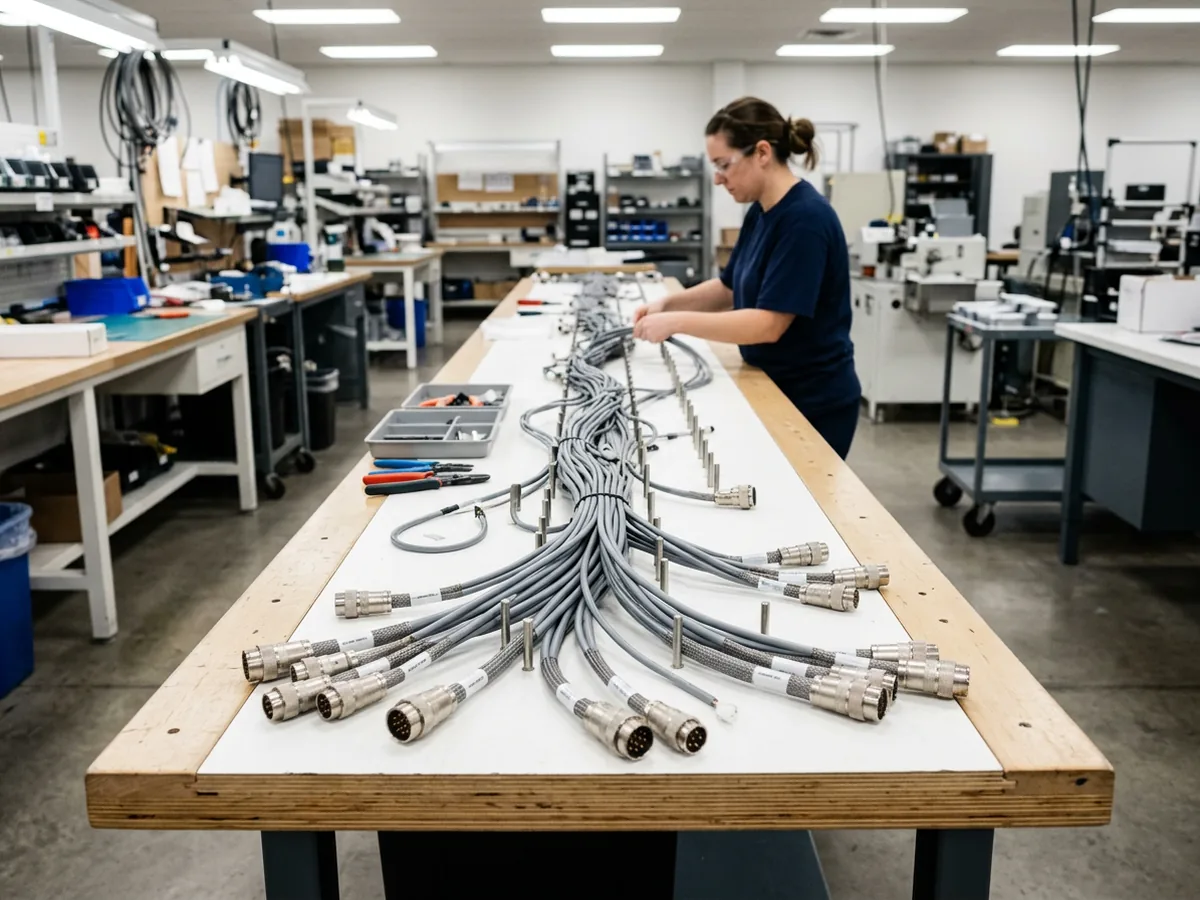
Something small you can check off works best. Maybe that’s learning which upcoming bid needs a shop like yours, how the prime’s supplier registration really works, or who buys your commodity (machined housings, harnesses, RF boards, whatever you make). Walking in with “get a contract” ends things fast, since nobody at that table can hand you one.
Edge case: the public award data shows the prime has nothing in your NAICS code in Orange, Los Angeles, or San Diego County. Go anyway if the slot’s open. Narrow the goal to how its small business office posts needs. That counts.
Homework: Two Hours on One Prime
Budget about two hours. Public sources only; guessing wastes the slot.
- Read the prime’s own supplier pages. Northrop Grumman’s supplier pages, for one, include an Office of Small Business Programs section and explain how to express interest in becoming a supplier. Find the equivalent page for the prime on your schedule.
- Has the prime posted subcontracting opportunities? SBA’s prime and subcontracting page says large businesses can post them in SUBNet, and that primes also use SBA’s Small Business Search (SBS) to find small subcontractors. Check your own SBS profile while you’re there.
- Award history. You can pull the public award data with the prime as the recipient and see which contracts it holds, where the work is performed, and when each one runs out.
- Does the prime take part in the DoD Mentor-Protégé Program? DFARS subpart 219.71 describes it as incentives for DoD contractors to help protégé firms build their capabilities. Worth knowing, not worth opening with.
Boil it down to five lines on an index card. You’ll reread it in the hallway outside the room, probably twice.
Plan the 15-Minute Prime Contractor Meeting
Then sketch the fifteen minutes themselves, on paper.
| Minutes | What you do | What you leave with |
|---|---|---|
| 0 to 2 | Your name, your company, one sentence on what you make and for whom; hand over the capability statement | They know where to file you |
| 2 to 5 | Ask what the prime is working on in your area and what’s hard to source | Their need, in their words |
| 5 to 10 | Match one or two past jobs to that need: tolerances held, volumes shipped, test standards met | A reason to remember you |
| 10 to 13 | Ask how supplier onboarding works and who buys your commodity | The process and a name |
| 13 to 15 | Agree on one next step and confirm contact details | A dated follow-up |
Look at who talks in minutes two through five. Not you. Read the brochure aloud during that stretch and the slot runs out before you’ve heard what they’re short on.
Three Questions to Ask, and Two to Skip
Bring three questions, written for a supplier office rather than a program office. Theirs come first.
- “Which of your current or upcoming programs need suppliers who do what we do, and where is that work performed?”
- Ask what a new supplier must have in place before a first purchase order: a quality system, a profile in your supplier portal, anything on cybersecurity.
- “Who should we follow up with?” Then ask what they’d like to see in that email.
The cybersecurity bit isn’t small talk. When a subcontract involves covered defense information, the DFARS 252.204-7012 clause comes with it, along with the NIST SP 800-171 security controls, and a prime will want to know where you stand before any work starts. Our CMMC and compliance readiness page walks through that preparation.
We’d leave two questions out. “Do you have any work for us?” pushes all the matching onto the other person. “Can you put us on your team?” asks for a commitment nobody in that chair can make in a quarter hour.
The Follow-Up Decides It
The meeting ends. The work starts.
Email within a day or two, while they still remember your face. Mention the specific need they described, attach the capability statement as a PDF with your company name in the file name, and answer whatever they asked. Then go do the thing they pointed you to, a supplier portal profile or a note to a commodity buyer, and reply once more to say it’s done, so the small business office sees you followed through.
Then wait. A month later, check in once with something new: a certification renewed, a part qualified, a new machine on the floor. Never a bare “just checking in.”
The longer road, from getting found by a prime’s small business office to the supplier checks a subcontract carries, is in our piece on how suppliers get onto a prime contractor’s team.
Where the Cluster Fits, and Where It Doesn’t
Prime contractor matchmaking is one of the SoCal Defense Innovation Cluster’s seven service areas. Its service page is blunt about the limits: “We don’t guarantee placement with a prime contractor.” What the cluster does is facilitate introductions and help members get ready for them, with a readiness review of the capability statement, the SAM.gov registration (for companies that plan to pursue prime contracts), and how you describe past performance.
You may not need us for this. SBA’s page also points small businesses to APEX Accelerators for help finding subcontracting opportunities. And cluster events and webinars are open to interested businesses; you don’t need to be an approved member to register and attend the cluster’s upcoming events.
Common Questions About Prime Contractor Matchmaking Meetings
How long does a matchmaking appointment with a prime usually run?
Each event sets its own length. The 2026 Government Procurement Conference booked 15-minute appointments with five-minute breaks and capped each company at three. Read your schedule email closely.
What belongs on the one page you hand the prime?
Your core capabilities, NAICS codes, UEI (the Unique Entity ID from SAM.gov) and CAGE code, a few past performance examples, and how to reach you. Keep it to one page. Put the capability the prime most likely needs at the top, because that’s the part read first.
Does SAM.gov registration matter for a subcontract meeting?
Short answer: keep it current either way. SBA notes that primes use its Small Business Search to find subcontractors, so an incomplete profile can cost you before the meeting even starts. If you plan to pursue prime contracts too, an accurate SAM.gov registration is part of the cluster’s own supplier readiness review.
What if the prime says it has nothing for you right now?
Wrong place to stop, slightly. Ask what would change that answer: a recompete, a new program, or a part they’d like a second source for. Then ask when to check back, and put the date in your calendar before you leave the table.
Should two people from your company go to the meeting?
Two can work if each has a job. The 2026 Government Procurement Conference allowed two company representatives per appointment. One talks. The other takes notes and watches the clock.
Does an introduction through the cluster lead to a subcontract?
No introduction can promise one. The cluster’s prime matchmaking page says results depend on your capabilities, your readiness, and the current needs of prime contractor supply chains. An introduction opens the conversation. What you do after it is what counts.
Prepare for the Next Prime on Your List
Supplier readiness is part of the cluster’s prime matchmaking service: your capability statement, your registrations, and how you talk about past work, before an introduction. Membership and cluster-funded services are provided at no cost to eligible participating businesses, subject to program requirements and available resources.