

If your company sells to commercial customers and somebody has told you the Navy could use what you make, the obvious move is a pitch deck about features. Hold off on it for a week.
Working out how to sell to a DoD program office begins on the other side of the table, with the mission problem that office is accountable for, the money it has to defend every budget season, and the date its next test event is supposed to happen.
What a DoD Program Office Actually Owns
A DoD program office is a government team, run by a program manager, that answers for a single capability from the first requirement document until the last fielded unit is retired: what it must do, what it costs, when it’s tested, and how it’s kept running. Many sit under a program executive office (PEO) that manages a group of related programs.
Signing contracts isn’t its job, though.
Ask a program engineer what went wrong last quarter and you’ll likely hear something specific and unglamorous, like a qualification test that slid two weeks, a connector whose only supplier walked away, or a deficiency the field keeps reporting that no current contract fixes. Bring something that touches one of those. Otherwise it’s a nice demo.
Who Sits in the Room, and Who Signs
Expect a program manager, maybe an engineer or two, and once in a while somebody from an innovation office. The contracting officer often isn’t in the room. Notice that.
| Who | What they own | What they can’t do |
|---|---|---|
| Program office | The requirement, the technical problem, test plans, the budget request | Award a contract or change one |
| Contracting officer | The solicitation, negotiation, award, and contract terms, within a delegated warrant | Own the technical requirement |
| Innovation office (DIU, AFWERX) | Faster front doors, such as commercial solicitations and prototype agreements | Promise that a program will buy what it prototypes |
The middle row deserves a slow read. Under FAR 1.602-1, contracting officers “may bind the Government only to the extent of the authority delegated to them.” So a program manager who says “we want this” hasn’t committed anyone to anything, and if someone without that authority agrees to buy something anyway, FAR 1.602-3 calls it an unauthorized commitment, which has to be ratified by an official who does hold the authority before it counts.
Ratification is slow and awkward for everybody, so don’t invite it. Our rule of thumb: ask a program office only for what it can hand over itself, like an hour with its engineers, a description of how it tests, or an honest read on where the requirement stands. Contracting questions go to contracting.
Homework Before You Ask for a Program Office Meeting
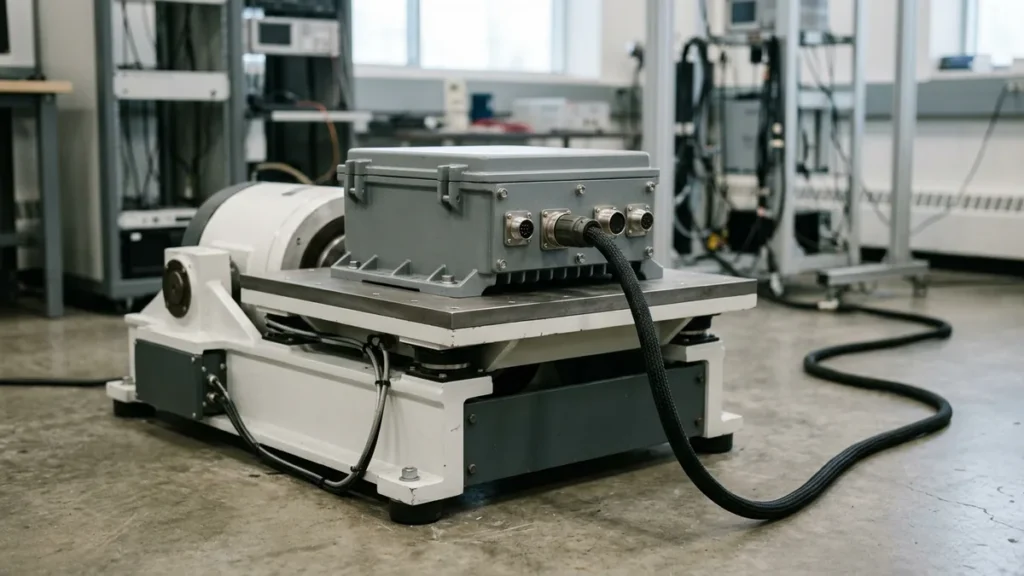
Is it even okay to ask for time before anything shows up on SAM.gov? It is, and the FAR says so outright. FAR 15.201 treats exchanges with industry, from the moment a requirement is first identified until proposals arrive, as something to encourage, and one-on-one meetings with potential offerors sit right there on its list of techniques. So go early.
Four homework items. Skip none.
- Find the mission, not the agency. “The Navy” isn’t a customer. A program that sustains one class of sensor is.
- Where does the requirement sit today? An idea in a study, funded and headed for a solicitation, or already on contract with a prime: each changes what you can reasonably ask for.
- If a prime holds the work, your route may run through a prime contractor’s supplier team first.
- Your own contracting path, ready before they ask.
Item four gets skipped. Often. Is there an SBIR award in your past? A catalog item with a public price? Nothing yet? The program team needs that answer to know which contract vehicle could even reach you.
AFWERX, NavalX, and Army xTech each keep entry programs for companies new to defense. Check their current pages. Rules change. DIU, the Defense Innovation Unit, is a simpler case: DIU’s Work With Us page describes a Commercial Solutions Opening (CSO), a competitive process for commercial solutions to needs it posts, awarded mainly as prototype Other Transaction (OT) agreements.
We wrote up how contracting officers find small businesses in a separate post, because that office searches its own way. Read both. Different jobs.
Run the First Meeting Around Their Problem
Laptop closed. Ask first. Try this one: what does the gear you’ve already fielded still do badly? Then stop and take notes, because the engineers on a program team can describe their system’s weak spots in more useful detail than any market study you could buy.
Other questions we’d bring:
- Where does this requirement stand right now, and what would have to happen for it to move?
- Who owns test? That person decides what evidence counts.
- What did the last company that pitched something like this get wrong?
- Is anyone already funded to solve it? You’d rather hear that today than after six months of follow-ups.
- What would you need to see before you’d put this in front of your test team?
Evidence helps in small doses. A dual-use company’s best material is usually commercial, whether that’s operating hours logged in customers’ hands, failure rates you measured yourself, or a line that ships units every week, and all of it should fit on one page the team can pass around after you leave.
Don’t ask for a contract. No one present can give you one, and the request tells the room you haven’t worked out who does what yet.
Where SBIR Phase III Fits
If your technology came out of a Small Business Innovation Research (SBIR) or Small Business Technology Transfer (STTR) award, you’re holding something a program office can use. The SBA’s SBIR/STTR Policy Directive defines Phase III as work that “derives from, extends, or completes an effort made under prior SBIR/STTR Funding Agreements, but is funded by sources other than the SBIR/STTR programs.”
“There is no limit on the number, duration, type, or dollar value of Phase III awards made to a business concern.” Source: SBA, SBIR/STTR Policy Directive, on SBIR.gov (checked November 17, 2026)
Read the funding clause twice. Phase III money comes from outside the SBIR and STTR budgets. That’s exactly why the program office has to want it. AFWERX’s Phase III page says Air Force SBIR program managers help plan Phase III actions “to help integrate a new technology into a Program of Record or other program,” and that sole-source Phase III awards may be made to the company.
Most of the trouble is timing. Our commercialization page puts it this way: “The path usually starts with identifying which program office has a requirement that matches your Phase II results and building that relationship before Phase II ends.” After is late. For the earlier phases, see our SBIR and STTR support page.
After the Meeting: A Next Step They Can Grant
Follow up within a day or two with a short note that restates their problem in their own words, plus the one-pager. Then propose one small step the office can approve without a contracting officer: an engineer-to-engineer technical exchange, data from your last test, a demo on their schedule.
After that, patience. A program office’s clock is set by budget cycles and test schedules, not your runway. Silence for a month often means a crowded month. Not a no.
When a prototype path fits, DIU’s page describes what can follow a successful prototype: any interested entity in the department has the authority to enter into non-competitive follow-on production contracts or agreements, and a vendor whose prototype satisfies the sponsoring customer is awarded a Success Memo, with no time restriction on its use. Can. Not will.
Planning your whole first year in defense, not just one meeting? Our defense market entry roadmap sets four entry strategies side by side.
Questions Founders Ask Before a Program Office Meeting
Can a program manager promise you a contract?
Not on their own authority. FAR 1.602-1 lets contracting officers bind the government only to the extent of the authority delegated to them, so a program manager’s enthusiasm is a good sign and nothing more. Treat it that way.
How do you find the right program office for your technology?
Work backward from the mission your technology improves, then look for the program that’s accountable for it. Innovation offices, industry days, and published acquisition forecasts all help narrow the list. So does asking each office you meet who else owns a piece of the same problem, because the people in program offices tend to know their neighbors better than any directory does.
Is it allowed to talk to a program office before a solicitation is out?
Short answer: the FAR encourages it. FAR 15.201 names one-on-one meetings with potential offerors among the ways to exchange information early, from the first identification of a requirement through receipt of proposals.
Should a dual-use startup lead with its commercial customers?
Use commercial traction as proof, and save it for after you’ve talked about the program’s problem. A reference customer running your product in salt fog or desert heat says more than a revenue chart does.
Where does SBIR Phase III money come from?
Anywhere except the SBIR and STTR budgets. The SBA’s policy directive defines Phase III as work funded by sources other than the SBIR/STTR programs, which is why a program office, another federal source, or a commercial buyer has to want the technology enough to pay for it.
Is there free help getting ready for a program office meeting?
Commercialization is one of the SoCal Defense Innovation Cluster’s seven service areas, and it includes identifying the program offices and primes most likely to buy and shaping how you describe your technology to a program manager. No introduction, meeting, or outcome is promised. Membership and cluster-funded services are provided at no cost to eligible participating businesses, subject to program requirements and available resources.
Map Your First Defense Buyer
Not sure which program office owns the problem your product solves? That’s a good first conversation to have with a point of contact at the SoCal Defense Innovation Cluster. Membership and cluster-funded services are provided at no cost to eligible participating businesses, subject to program requirements and available resources.